
After eight years of study, a Children’s Hospital of Michigan neurosurgeon and his colleagues are using an endoscope to perform surgical procedures to help control intractable epileptic seizures in pediatric patients – without subjecting them to the invasive skull surgery that has been previously required for treatment. The pioneering surgical technique by Sandeep Sood, M.D., who is also an associate professor of Neurosurgery at the...
Read More
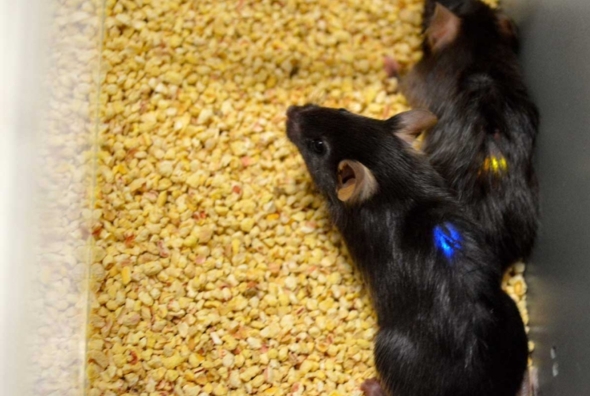
A technique called optogenetics has transformed neuroscience during the past 10 years by allowing researchers to turn specific neurons on and off in experimental animals. By flipping these neural switches, it has provided clues about which brain pathways are involved in diseases like depression and obsessive-compulsive disorder. “Optogenetics is not just a flash in the pan,” saysneuroscientist Robert Gereau of Washington University in Saint Louis....
Read More
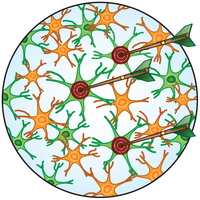
The year 2015 marked the ten-year anniversary of the introduction of channelrhodopsin 2 (ChR2) into neuroscience. ChR2 has proven to be a powerful tool not only for stimulating neurons, but also for inspiring the development of other optogenetic tools. Typically, these tools are excited with wide-field illumination, and specificity is imparted by their expression in genetically defined neurons. But for a more detailed dissection of...
Read More